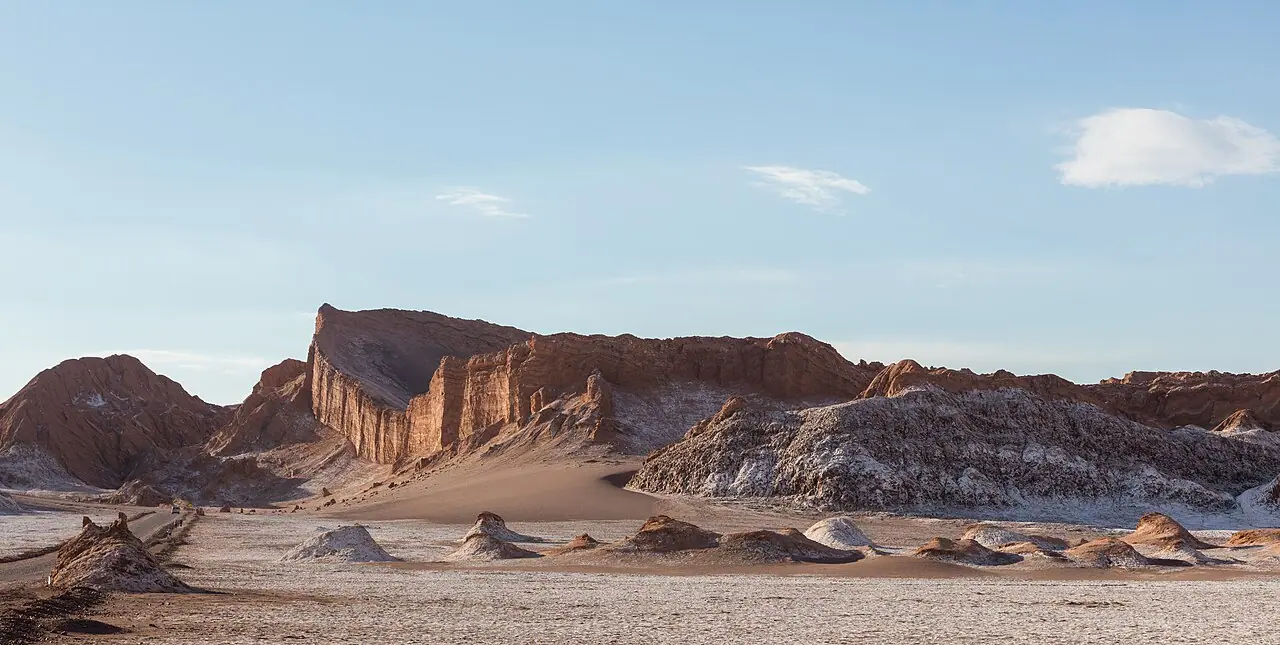
The Amphitheater in Valle de la Luna, Atacama Desert
Photo by Diego Delso · CC BY-SA 4.0
How it was shot
Diego Delso photographed this rock formation, known as the Amphitheater, in Valle de la Luna near San Pedro de Atacama during the golden hour, according to the file description. Low sun from the side picks out every horizontal stratum in the cliff and warms the rock to orange, while the foreground sand stays cooler and paler.
The camera data shows a Canon EOS 5DS R with a 24–105 mm lens at 67 mm, f/11, 1/125 s and ISO 100. That is a revealing choice for a landscape. Instead of going wide, the photographer stepped back and used a short telephoto, which compresses the scene and keeps the cliffs large in the frame relative to the empty desert. The wide crop, roughly 2:1, removes empty sky and leaves a single band of layered color.
This is a useful approach for desert scenes, which can look vast and empty on a wide lens. Pick one formation, give it most of the frame, and wait for side light. In Atacama, the hour before sunset is when the colors appear.
Read our spotlight on Diego Delso, written from public information about their openly licensed work.