Beach Sediment Patterns, Algarve, Portugal
Photo by Lusi Lindwurm · CC BY-SA 4.0
How it was shot
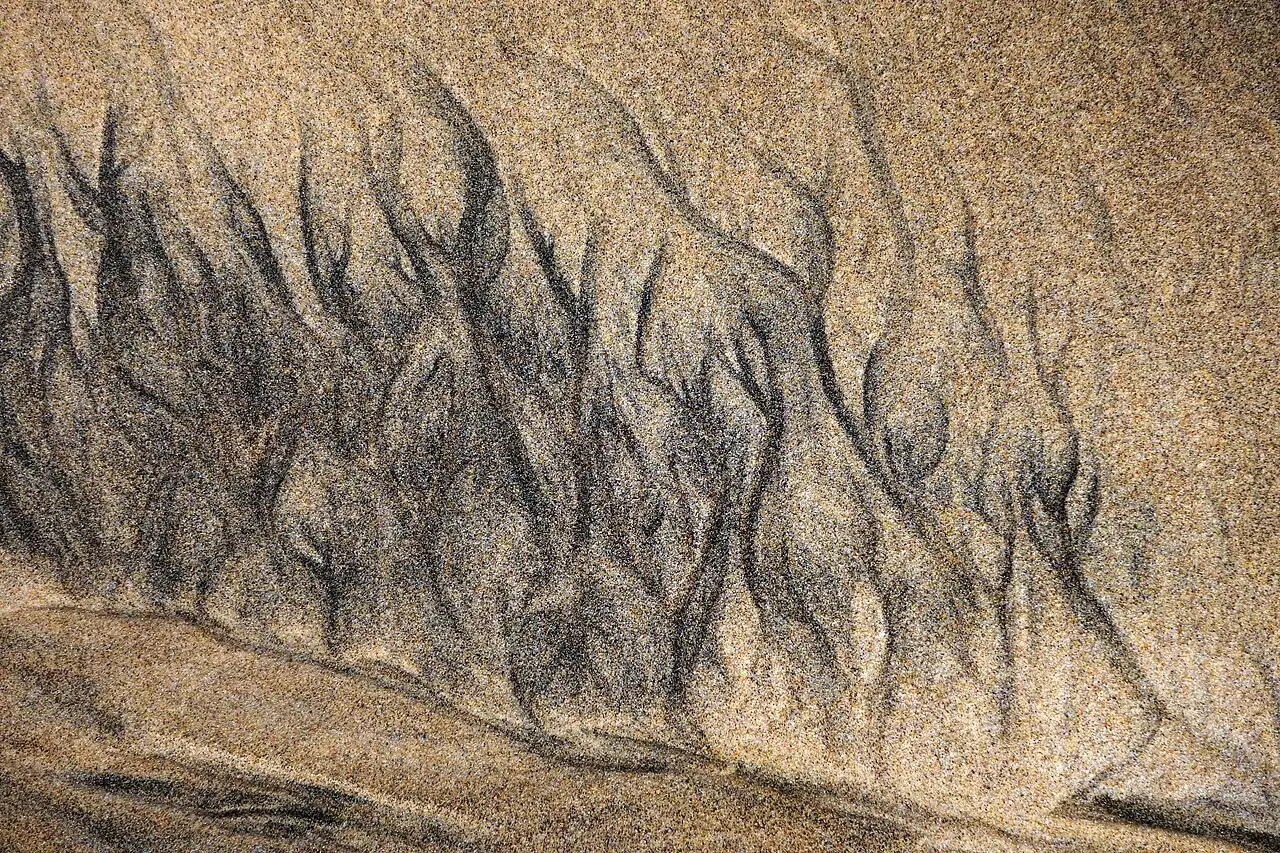
Lusi Lindwurm photographed beach sediment in the northern Algarve, Portugal. The description explains the science: quartz sand mixed with smaller particles of darker, heavier minerals forms tiny braided “rivers” in the surf zone, with the dark minerals separated out by their weight. The result looks like ink brushed across paper, or the branches of a tree.
The camera data shows a Sony RX100 II at 16 mm (43 mm equivalent), f/5.6, 1/1000 s, ISO 200 and −0.7 EV. A pocket compact is perfect for this kind of found abstraction. It’s always with you, and from a standing position its normal focal length shows a patch of beach about a meter across. The negative compensation keeps the bright, wet sand from washing out.
The strongest abstracts often come from looking down. Wet sand after a receding wave, frost on a window or oil on a puddle can all become images without context. Low side light, early or late in the day, brings out the relief in sand. Hold the camera parallel to the ground and fill the frame so that nothing reveals the scale.