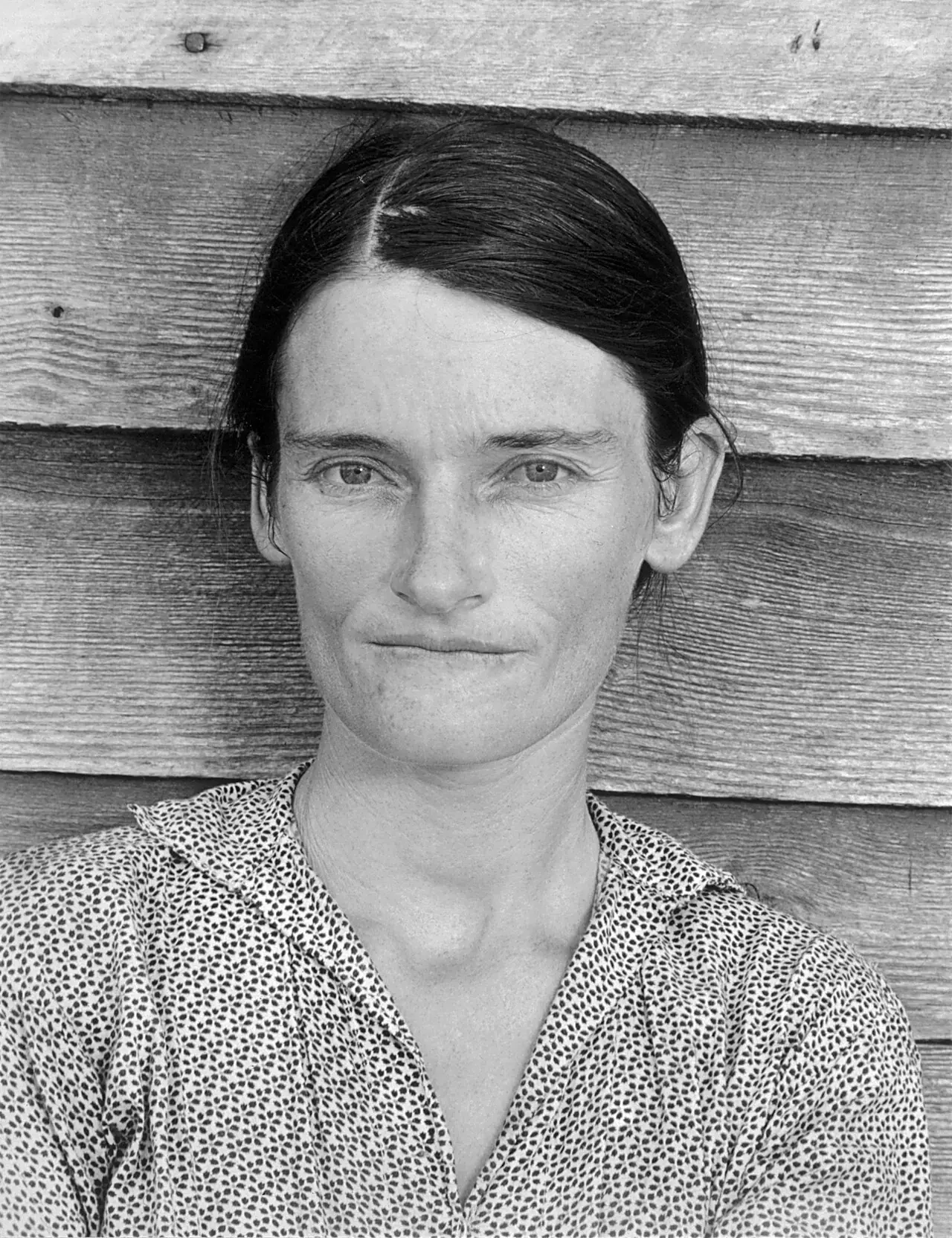
Allie Mae Burroughs, Hale County, Alabama (Walker Evans, 1936)
Photo by Walker Evans · Public Domain
How it was shot
Walker Evans photographed Allie Mae Burroughs in Hale County, Alabama, in 1936, while working for the Farm Security Administration. The source tags it PD US FSA/OWI, a US government work in the public domain. It became one of the defining images of the Great Depression and appeared in Let Us Now Praise Famous Men, the book Evans made with writer James Agee.
No camera data exists for a 1936 film photograph, but Evans is well known for working with an 8×10 view camera on a tripod for much of the project. That explains the remarkable detail in the wood grain and the fabric of her dress. It also explains the slow, deliberate quality of the picture. A view camera takes minutes to set up, and the subject knows she is being photographed.
The composition is simple. She faces the camera directly, in even daylight, against the bare boards of her home, with nothing to distract from her expression. That directness is still a lesson for portrait photographers: choose a plain, meaningful background, use soft light, and let the person meet the lens.