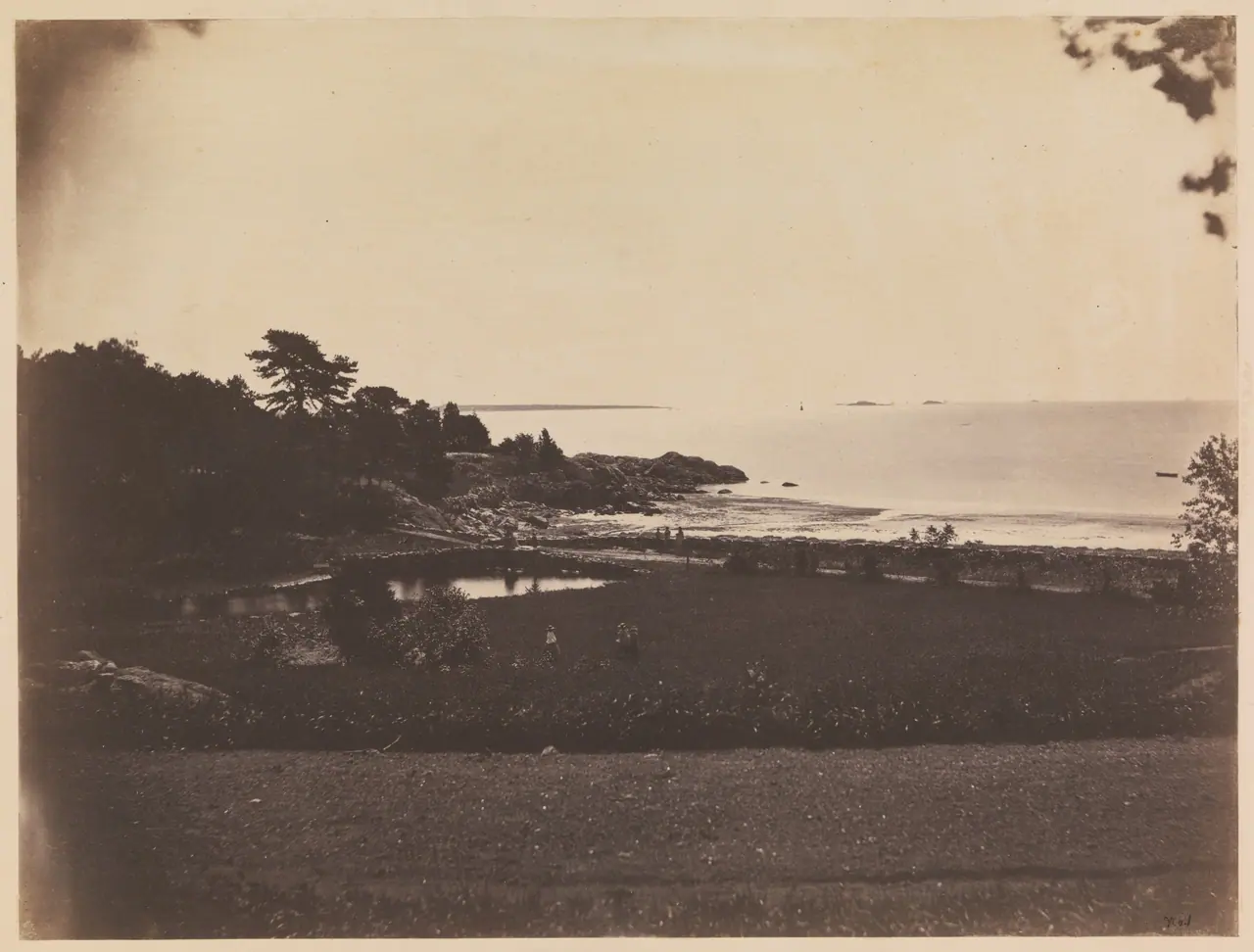
Landscape at Pride’s Crossing, Massachusetts (c. 1856)
Photo by Samuel Masury · CC0 1.0 (Public Domain Dedication)
How it was shot
This view of Pride’s Crossing on the Massachusetts coast is attributed to Samuel Masury and dated about 1856 by The Metropolitan Museum of Art. The Met describes it as a salted paper print from a paper negative, part of the Gilman Collection, and releases it under CC0 through its Open Access program.
It comes from photography’s first two decades. A paper negative, like a calotype, was a sheet of light-sensitive paper exposed in the camera for seconds to minutes. The paper’s fibers soften fine detail, which gives these prints their painterly look. Salted paper prints were then contact-printed in sunlight, which produces the warm brown tones and matte surface you see here.
The composition is simple: a band of grass, trees on a low headland, and the pale sea. Early photographers often chose still subjects like this because their long exposures could not freeze movement. We include it in our black-and-white collection as a reminder of where the medium started. Toning a modern monochrome image warm can echo this look, though not the delicate texture of a paper negative.