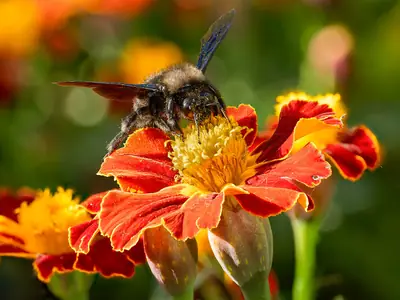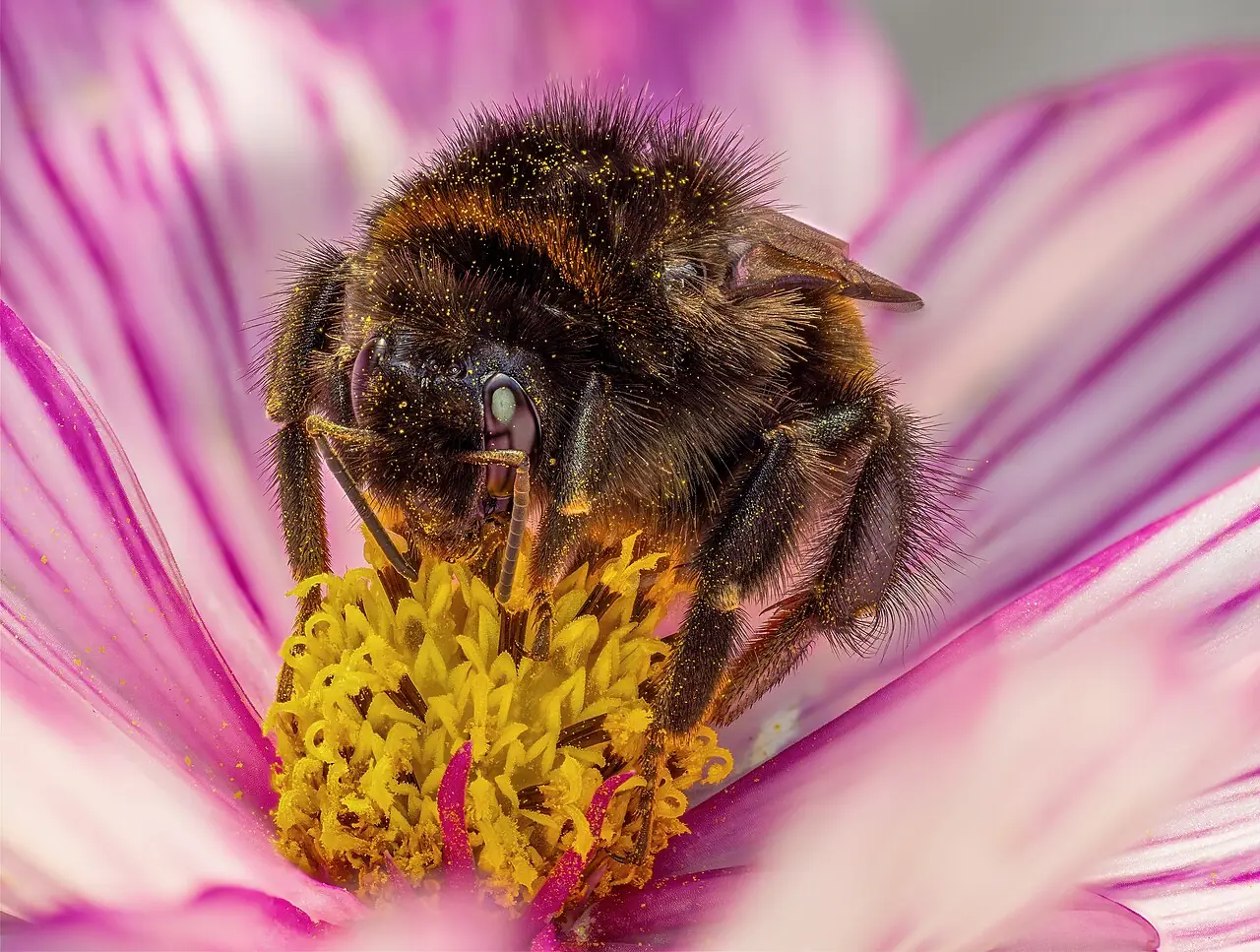
Bumblebee on a Cosmos Flower, a 28-Frame Focus Stack
Photo by Ermell · CC BY-SA 4.0
How it was shot
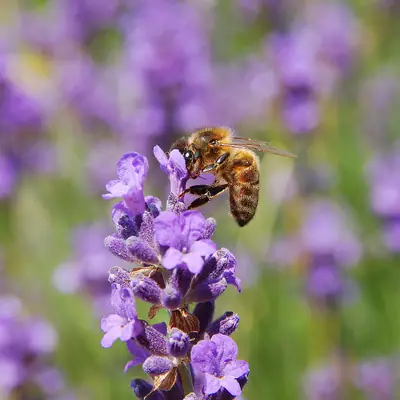
Ermell photographed an earth bumblebee feeding on a cosmos flower in a garden in Bamberg, Germany. The description says the final image is a focus stack of 28 pictures. Every hair on the bee’s thorax, its legs and the pollen-heavy center of the flower are sharp, while the pink petals soften toward the edges.
The camera data shows an OM System OM-1 with the 90 mm f/3.5 macro lens at f/6.3, 1/100 s and ISO 200. At close range, even f/6.3 gives only a sliver of sharp focus, often under a millimeter. Focus stacking solves this. The camera takes a burst of frames, each focused slightly deeper, and software merges the sharpest parts. Several current cameras, including the OM-1, can shoot the bracketed burst automatically, which makes it possible even with a live insect that moves only slightly.
The best time to try this is a cool morning or evening, when bees move slowly. Keep the aperture moderate (f/5.6–f/8) for good sharpness, take the burst quickly, and choose a flower angle that puts the insect against a clean petal.