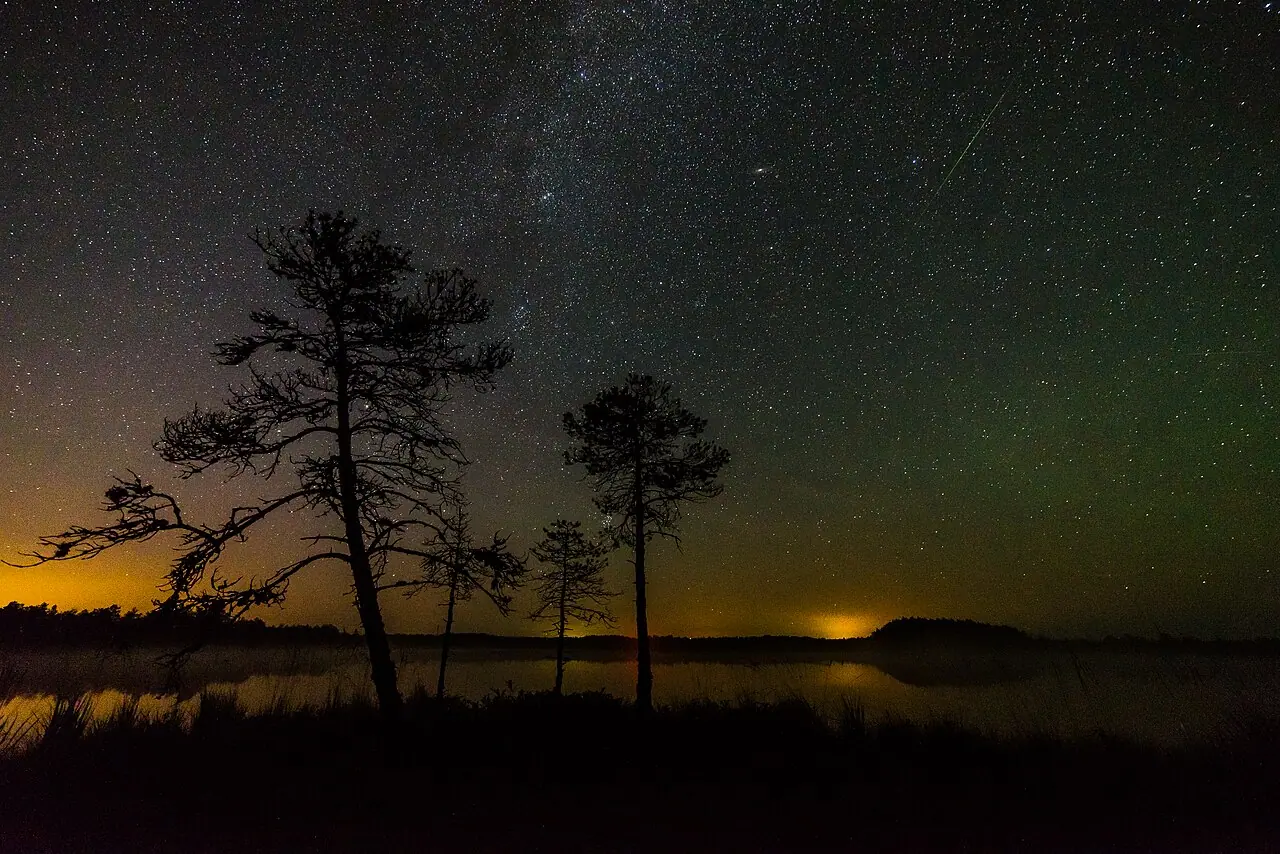
Perseid Meteor, Milky Way and Andromeda Over an Estonian Bog
Photo by Martin Mark · CC BY-SA 4.0
How it was shot
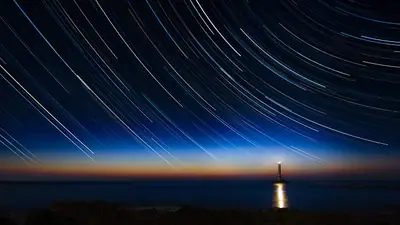
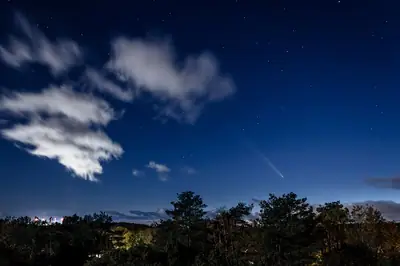
Martin Mark photographed the night sky over Luhasoo bog in Estonia during the August 2015 Perseid meteor shower. The description lists what is in the frame: one Perseid meteor, the Milky Way, the Andromeda Galaxy and light pollution on the horizon. The twisted bog pines stand in silhouette against the sky.
The camera data shows a Nikon D600 at 15 mm, f/4, 20 seconds and ISO 1600. The lens reports “0 mm f/0” in the metadata, which usually means a manual-focus lens without electronic contacts. That is a popular choice for astrophotography, because these lenses are often inexpensive and sharp. Twenty seconds at 15 mm keeps stars close to pinpoints on a full-frame sensor.
Meteor photography is mostly about patience. Set the camera on a tripod, frame a wide area of sky with a good foreground, and shoot continuous 15–25 second exposures for an hour or more. Most frames will be empty; a few will catch a streak. The Perseids peak around August 12 each year, and moonless nights are best.